
Metal vs Asphalt Roofing for Ontario Homes: An Honest Comparison
What to expect from costs, lifespan, performance, and local rules in Brampton and Peel Region.
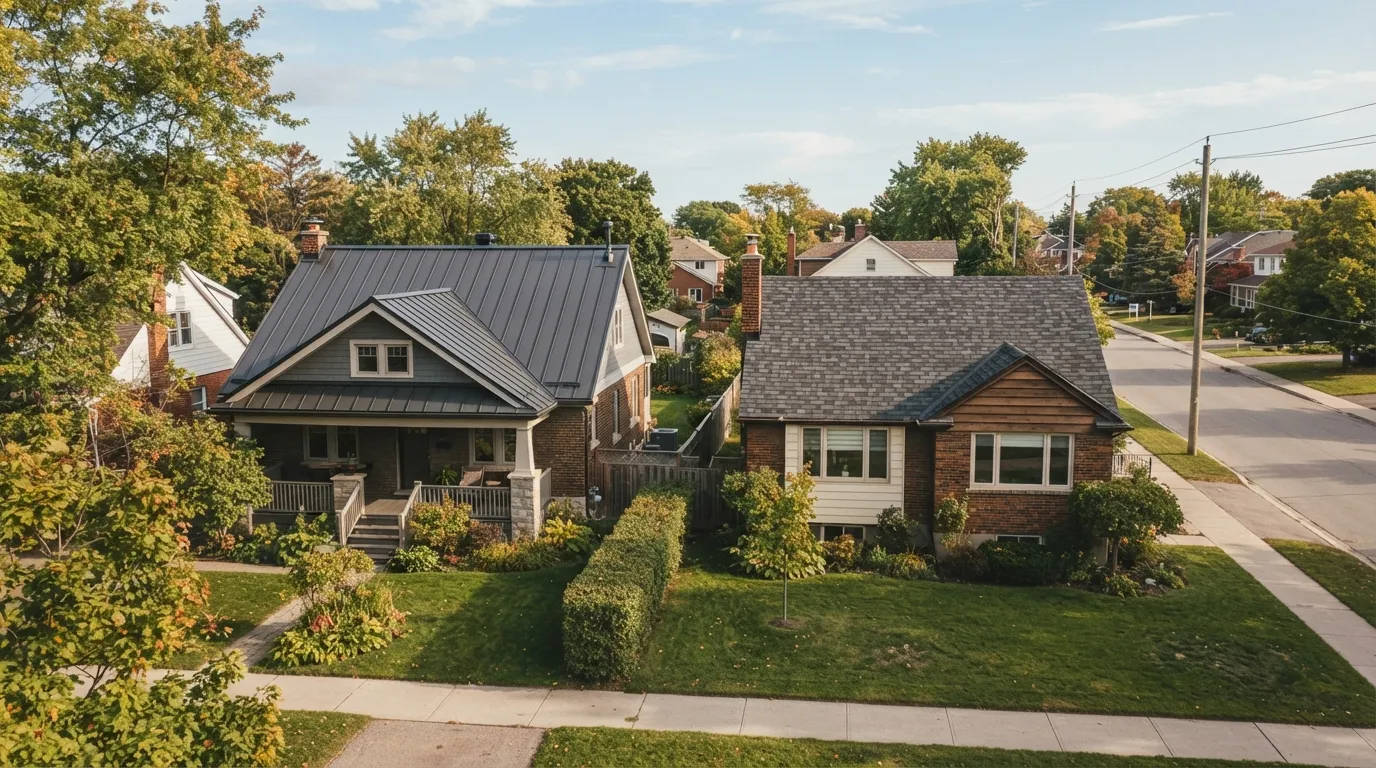
Which is better for Ontario homes: metal or asphalt roofing?
There’s no single “better” choice—metal roofs last longer and shed snow better, while asphalt shingles cost less up front and are easier and cheaper to repair; your best option depends on budget, roof complexity, and long-term plans.
What each material is
Asphalt shingles are composite panels with a fiberglass or organic mat, coated with asphalt and mineral granules. Metal roofing covers a range (steel, aluminum, zinc, copper) delivered as panels or shingles; coatings and profiles change performance and cost.
Typical lifespan and durability
Asphalt shingles typically last 15–30 years depending on product quality and installation; high-end architectural shingles approach the upper end. Metal roofs commonly last 40–70 years with proper coatings and flashing, resisting rot and most wind damage better than asphalt.
How they behave in Ontario weather
Southern Ontario, including Brampton in Peel Region, sees freeze-thaw cycles, heavy snowfall and occasional ice storms—metal sheds snow and ice more readily, while asphalt can be vulnerable to ice dams if attic ventilation and insulation are poor.
Cost trade-offs
Upfront installed costs for asphalt are usually lower; metal is higher initially but can pay back through longevity and lower maintenance. Exact prices depend on profile, deck prep, insulation, and local labour availability around Brampton, Mississauga and Caledon.
Step-by-Step: Metal vs Asphalt Roofing for Ontario Homes: An Honest Comparison
A clear homeowner process to compare, plan, and choose between metal and asphalt for a roof project in Brampton or nearby communities.
- 1
1. Inspect and document the existing roof
Walk the roof perimeter and attic (if safe) or hire a professional for a full inspection. Note leaks, deck rot, shingle granule loss, and take photos for reference and future permit or insurance conversations.
- 2
2. Define your priorities
Decide if you value lowest up-front cost, low maintenance, longevity, or better snow performance. Consider how long you plan to live in the house—metal is a stronger investment if you expect to stay for decades.
- 3
3. Get multiple, detailed quotes
Request at least three written estimates that list materials, underlayment types, ventilation measures, flashing details, and removal/disposal. Compare line items—cheaper bids often skimp on underlayment, ice-melt membranes, or proper flashing.
- 4
4. Check local rules and permits
Contact Brampton’s building department (or your city in Peel Region) to confirm permit requirements, flashing standards, and bylaw rules — e.g., some neighbourhoods have historic or HOA restrictions. Confirm with your insurer whether material changes affect coverage or replacement-cost limits.
- 5
5. Review contract and scope
Confirm deck repair contingencies, ventilation improvements, and final cleanup in the contract. Insist on warranty details for labour and materials, and on manufacturer-approved fastening and underlayment for your chosen product.
- 6
6. Oversee installation and final inspection
Ask for progress photos and a completion walkthrough to check flashing, ridge ventilation, and clean eaves. Obtain final invoices and manufacturer warranty paperwork, and save documentation for future resale or insurance.
Mistakes to Avoid
Choosing or installing the wrong roof can cost thousands and create persistent problems like leaks, ice dams, or reduced resale value. Avoid common errors by focusing on ventilation, correct fastening, and honest contractor practices.
Skipping ventilation and insulation upgrades
Poor attic ventilation and inadequate insulation drive ice dams and shorten asphalt shingle life; they can also create condensation under metal panels. Before reroofing, evaluate and correct attic airflow and insulation levels to protect your new covering.
Accepting vague quotes
A quote that omits underlayment type, flashing material, or disposal costs is a red flag. Require line-item details—e.g., synthetic ice-and-water shield in valleys and eaves, cubic yards of tear-off, and exact panel profiles for metal roofs.
Mismatching trim and flashing materials
Using incompatible metals (for example, copper flashings with galvanized steel panels) can cause galvanic corrosion. Ask for matching, manufacturer-recommended components and fasteners, and verify colours and gauges before work starts.
Trying DIY on complex roofs
Simple repairs can be DIY, but steep slopes, multiple penetrations, or patterned metal installs are technical and risky. Improper fastening or underlayment can void warranties—hire experienced installers for complex or high-exposure roofs.
What Affects Your Outcome
Key factors that change costs, performance, and decision-making.
Roof pitch and complexity
Steeper roofs and many valleys increase labour time and material waste; metal panels can be harder to fit on complex roofs, raising costs.
Existing deck condition
Damaged or wet sheathing requires repair or replacement, which adds time and cost and affects warranty eligibility.
Attic ventilation and insulation
Adequate ventilation and R-value help prevent ice dams on asphalt and condensation under metal, extending roof life.
Material selection and coatings
Different metal alloys, gauges, and paint systems change corrosion resistance and noise; asphalt shingle classes and warranties vary by uplift rating and granule type.
Local climate and microclimate
Brampton’s freeze-thaw cycles, snow loads and occasional ice storms make snow-shedding and ice-and-water protection important considerations.
Contractor skill and adherence to manufacturer specs
Proper fastening patterns, underlayment choices and flashing techniques are critical; improper installation causes most premature failures.
Frequently Asked Questions
Will a metal roof increase my heating or cooling costs?
Metal reflects more solar radiation than dark asphalt, which can reduce cooling loads in summer, but in Brampton the seasonal benefit is modest. Proper attic insulation and ventilation have a larger impact on year-round energy use than the roof surface material alone.
Is a metal roof noisy in rain or hail?
When installed over a typical deck with underlayment and attic airspace, modern metal roofs are not significantly noisier than asphalt. Sound differences are most noticeable from inside only when there’s no attic insulation or the installer omits standard underlayment layers.
Do I need a permit to replace my roof in Brampton?
Many municipalities in Peel Region require permits for full roof replacements; minor repairs often do not. Always check with Brampton’s building department to confirm local permit rules and any required inspections—requirements can change.
How do warranties compare between metal and asphalt?
Manufacturers typically offer longer material warranties on metal (30–50 years common) while asphalt warranties are shorter (10–30 years depending on grade). Labour warranties vary by contractor—get both manufacturer and installer warranties in writing and confirm transferability if you might sell the house.
Will my insurance premium change if I switch materials?
Insurers sometimes offer rate adjustments for more fire-resistant or longer-lasting materials, but policies and underwriting vary by company. Check with your insurer before changing materials and keep records of product ratings and installation documents to support any premium discussions.
Can metal be installed over existing asphalt shingles?
Some metal systems allow installation over a single layer of asphalt shingles, but local codes and manufacturer warranties may prohibit it. Removing the old roofing lets you inspect the deck, fix rot, and ensure proper fastening and insulation—usually a better long-term choice.
Free roof inspection and materials assessment for Brampton homeowners
We’ll inspect your roof, review ventilation and deck condition, and outline metal and asphalt options — no pressure, just facts. Verify permits and insurance rules locally.
Get a Free Quote